Rural India's Digital Divide Is Not Just About Internet
Connectivity matters, but the deeper gap is what happens after a device enters the classroom.
63.5%
Indian schools with internet access in UDISE+ 2024-25

A computer lab is not digital inclusion by itself. It becomes inclusion when a child can use it often, safely, and with a teacher who knows what to do next.
The gap has changed shape
A few years ago, the digital divide was easy to describe: some children had devices and many did not. That is still true in many places, but the sharper problem is now more layered. A school may have a few computers but no working timetable for them. It may have internet on paper but unreliable power in practice. A family may have a smartphone, but the daughter may not be the person who gets to hold it long enough to learn.
UDISE+ 2024-25 shows real movement in school infrastructure. The Ministry of Education reported that computer access rose to 64.7% of schools and internet access to 63.5%. That progress matters. But it also means millions of students are still learning in schools where digital access is partial, fragile, or absent.
For SFI, the useful question is not simply, 'Does this school have a device?' The better question is, 'Can a student build confidence with technology here every week?' That shifts the work from donation to design.
Access has five parts
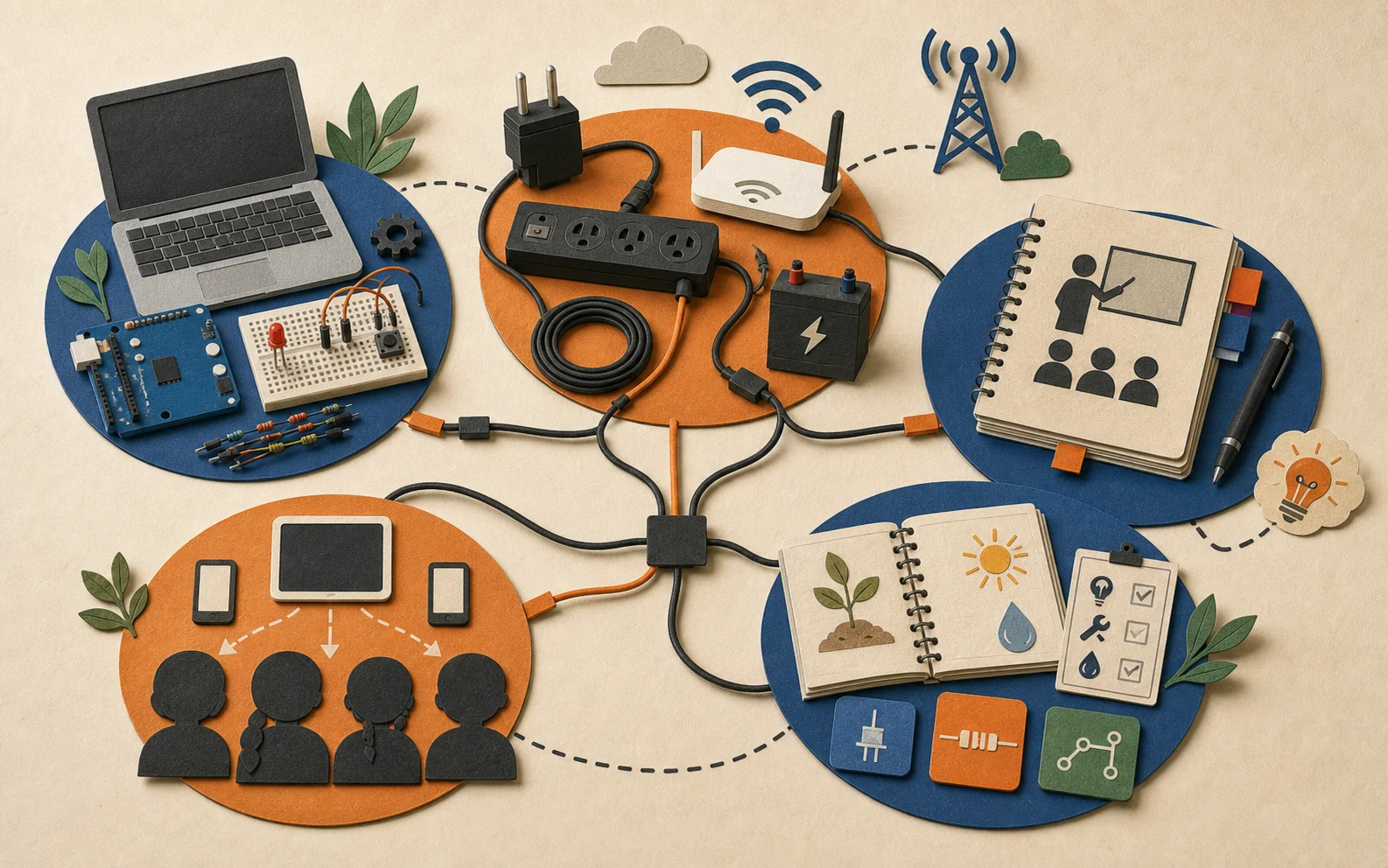
The first part is hardware: laptops, tablets, projectors, microcontrollers, charging racks, and repairable peripherals. The second is power and connectivity. The third is teacher readiness. The fourth is safe, fair student access. The fifth is curriculum that makes the device worth using.
When one part is missing, the whole system weakens. A laptop without teacher support becomes a locked object. Internet without a learning sequence becomes entertainment. A good STEM kit without replacement wires and batteries becomes a one-month novelty. Rural schools do not need fragile showpieces. They need durable routines.
That is why community STEM labs should be designed like working infrastructure. Every box should have a purpose. Every session should end with something students touched, tested, debugged, or explained. The lab should survive dust, power cuts, absent teachers, and the first broken cable.
- +A shared device schedule so girls and quieter students get protected lab time.
- +Offline-first lessons that still work when internet drops.
- +Simple maintenance logs, spare parts, and local repair habits.
- +Teacher guides that convert equipment into repeatable classroom practice.
Why digital literacy must be practical
Digital literacy is often treated as a checklist: open an app, type a document, search the web. Those are useful, but they are not enough. A rural student needs to know how to judge information, use a form, protect privacy, share a file, follow instructions, and ask better questions with a device in hand.
The ASER 2023 'Beyond Basics' survey is helpful here because it looked at rural youth aged 14 to 18 and assessed real tasks, not just enrollment. Many students could use smartphones, but gender differences showed up in ownership, practical use, and confidence. That means a good program cannot assume access is equal just because a household has a phone.
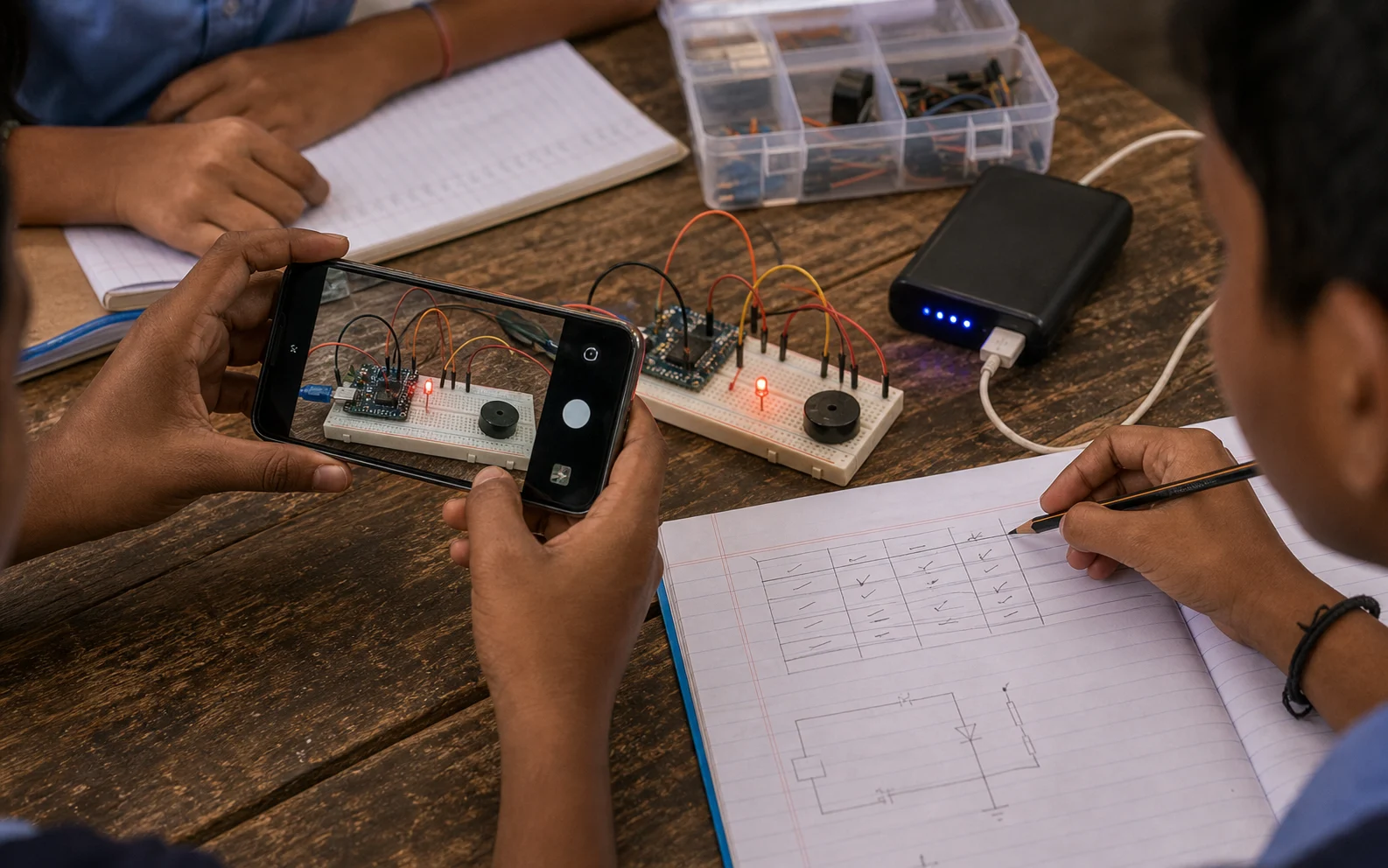
Digital literacy becomes meaningful when it is tied to agency. A student who uses a phone to watch a lesson is consuming. A student who uses it to record a soil-moisture experiment, calculate a budget, look up a sensor datasheet, and explain findings to classmates is learning to operate in the modern world.
What SFI can build differently
The strongest rural STEM programs do not wait for perfect infrastructure. They start with a tight loop: a small lab, a trained facilitator, a weekly build session, a local problem, and a public moment where students show what they made. That loop creates confidence faster than a room full of equipment used twice a year.
The digital divide closes when technology becomes normal, useful, and shared. A school does not have to look like a city private school to teach modern skills. It has to give students repeated chances to think with tools.
Sources and further reading
Read next
All notesWhy an Arduino Simulator Belongs in a Rural STEM Lab
How browser-based circuit simulation can protect limited kits, help teachers explain invisible logic, and give rural students more chances to practice.
Village Problems Make the Best STEM Projects
Why rural maker education should start with familiar problems and guide students toward prototypes they can explain to their own community.