A Mobile STEM Lab Can Carry a Classroom
When a school cannot yet build a full lab, the lab can arrive in boxes, bags, trunks, and a teacher's steady routine.
1 kit
A portable lab can serve many classrooms when the routine is strong

A rural lab does not have to begin as a room. It can begin as a well-packed box, a clear lesson, and a promise that the kit will come back next week.
The lab does not always need walls
In a perfect world, every rural school would have a bright STEM room with storage, power, workbenches, computers, tools, and trained teachers. In the real world, many schools are still waiting for that room. The good news is that STEM learning does not have to wait with it.
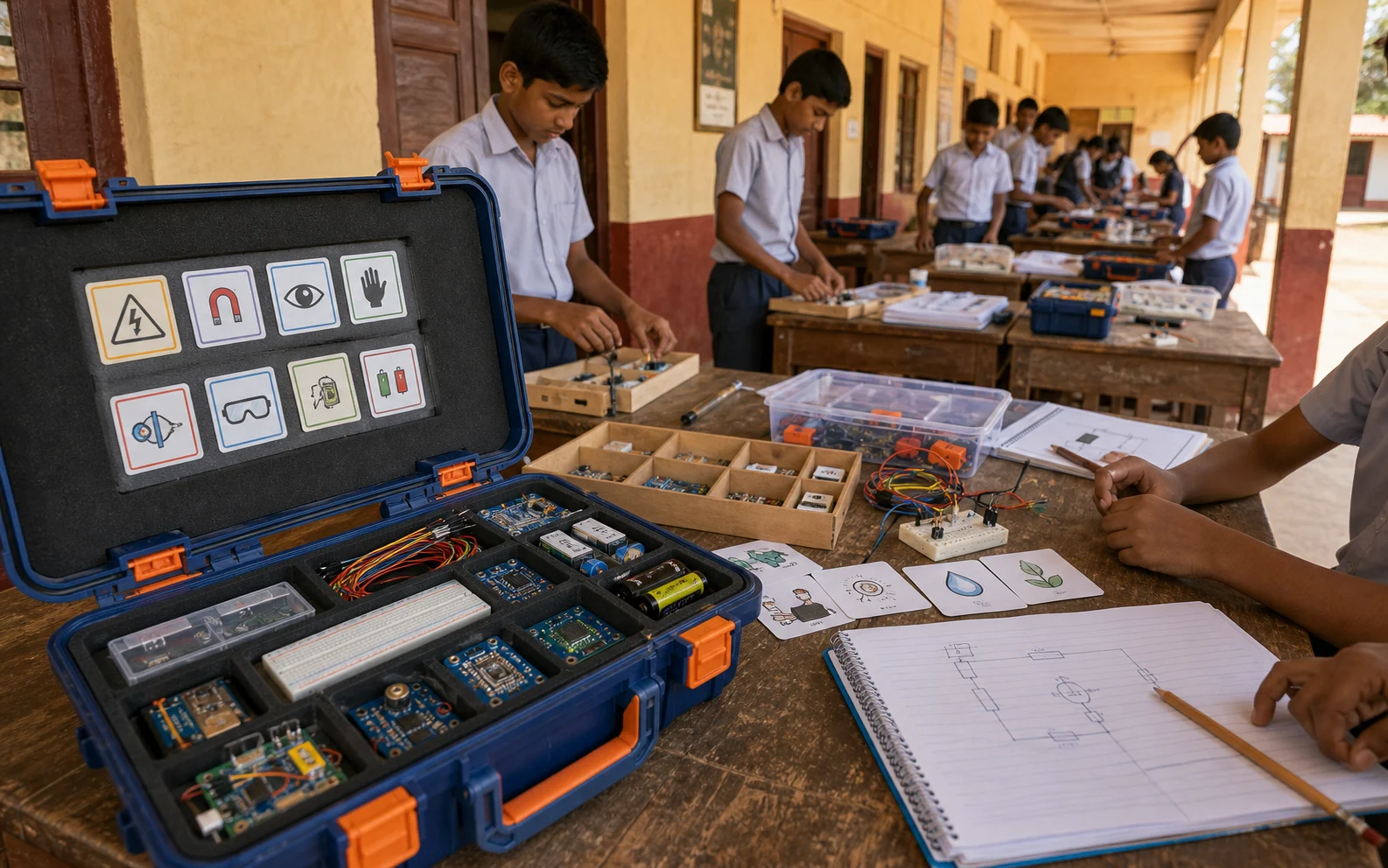
A mobile lab can carry the first version of the classroom: microcontrollers, breadboards, sensors, LEDs, motors, batteries, printed guides, safety cards, and a few sturdy project trays. The kit arrives, the desks shift, the children gather, and the room becomes a lab for the hour.
This model respects reality. It does not pretend infrastructure gaps are small. It simply refuses to let those gaps decide whether a child gets to build.
Portability changes the math
A fixed lab serves the students who can reach it. A portable lab can move across schools, clusters, or village learning centers. That matters when budgets are thin and schools are scattered. One well-maintained kit library can create repeated exposure before a permanent lab is possible.
Several rural STEM efforts in India use this idea in different forms: makerspace kits, mobile labs, and robotics labs on wheels. The pattern is similar. Bring the materials closer to the student, keep the activities hands-on, and make the session easy enough for schools to host again.
For SFI, the mobile model can also act as a test bench. A portable kit reveals which projects excite students, which parts break first, which instructions confuse teachers, and which lessons deserve a permanent setup.
- +Pack kits by lesson, not only by component type.
- +Use trays so teams can build without losing small parts.
- +Track every wire, battery, and sensor after each session.
- +Design each activity so it can survive dust, travel, and mixed class sizes.
The visit must become a rhythm
The risk with a mobile lab is that it becomes an event. Children enjoy one exciting day, take photos with the kit, and then the learning disappears until the next celebration. A mobile lab only becomes education when it returns often enough for skills to grow.
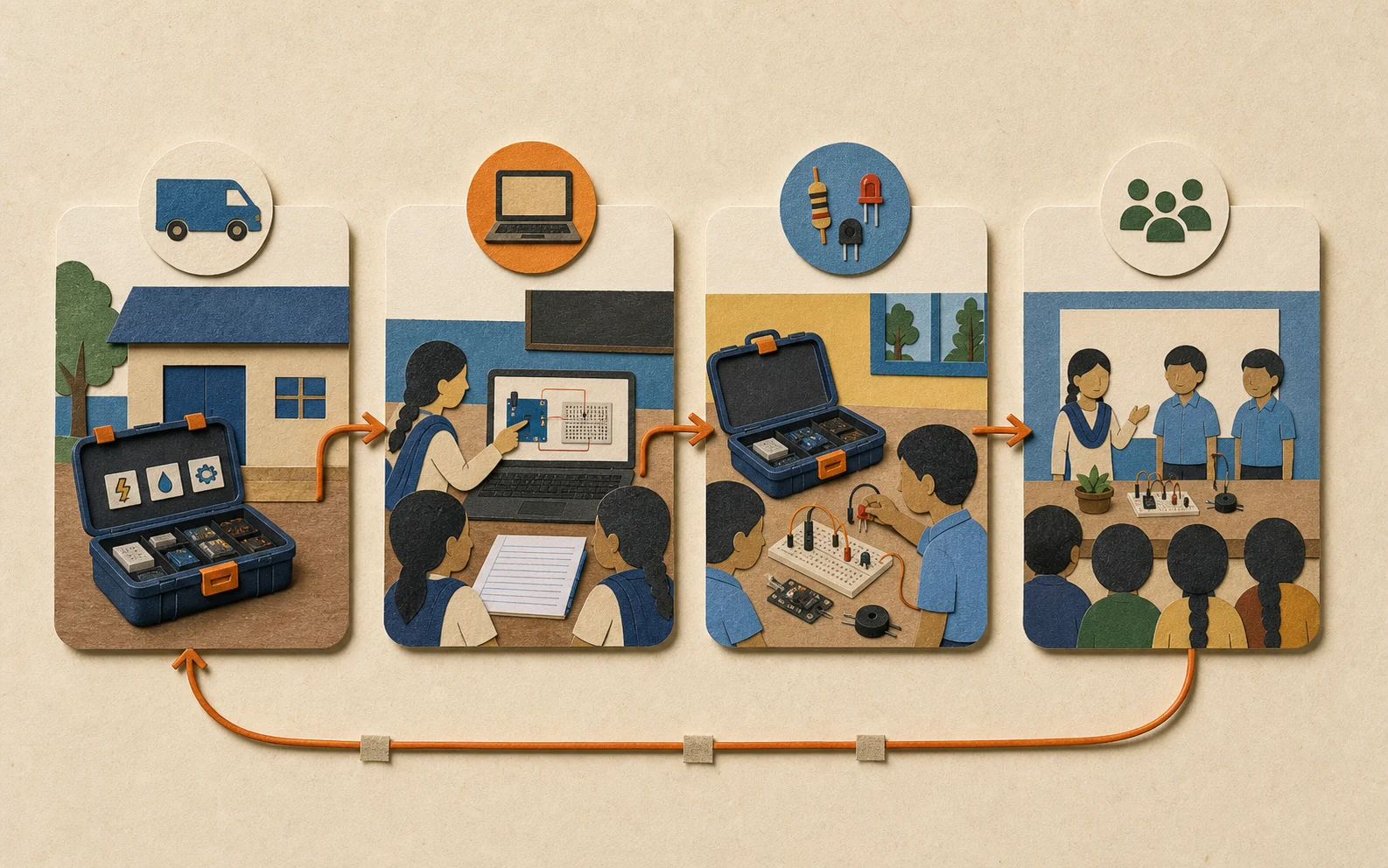
A strong cycle could be simple: Week one, the kit arrives and students build a basic circuit. Week two, the teacher runs a simulator version or worksheet without the full kit. Week three, the kit returns for a challenge build. Week four, teams explain their project to another class.
That rhythm turns a traveling resource into a classroom habit. The kit is no longer a visitor. It becomes part of how the school learns.
What SFI can do with it
SFI can design mobile lab packs around clear themes: light, sound, water, motion, energy, and simple code. Each pack should include the physical parts, a simulator scene, a teacher script, a repair checklist, and a student reflection card.
The first goal is not to impress the school with expensive equipment. The first goal is to create a reliable moment where every child gets to touch the idea. A mobile lab that does that well is already a classroom on the move.
Sources and further reading
Read next
All notesWhy an Arduino Simulator Belongs in a Rural STEM Lab
How browser-based circuit simulation can protect limited kits, help teachers explain invisible logic, and give rural students more chances to practice.
Village Problems Make the Best STEM Projects
Why rural maker education should start with familiar problems and guide students toward prototypes they can explain to their own community.