The Mentor Layer Rural STEM Programs Need
Hardware can open the door, but students need people who help them stay in the room.
1:many
The best mentor model multiplies teacher and student confidence

A mentor is not there to be the smartest person in the room. A mentor is there to keep the question alive long enough for the student to own it.
The missing middle
Many education programs think in two layers: resources and students. Put kits in a school, run sessions, measure participation. That is a start, but rural STEM work needs a stronger middle layer: mentors who help teachers and students convert exposure into sustained practice.
The first workshop is usually exciting. Students gather around motors and LEDs. Photos look good. The room has energy. The harder question comes three weeks later: Who helps when the code breaks? Who encourages the quiet student to present? Who helps the teacher simplify a project without killing its purpose? Who asks the next question after the first prototype works?
That is the mentor layer. It is the difference between an event and a learning culture.
Teachers cannot carry it alone
Rural teachers often work with large classes, limited subject support, mixed learning levels, and administrative pressure. Asking them to suddenly become electronics instructors, coding coaches, repair technicians, and innovation mentors is unrealistic unless the program supports them properly.
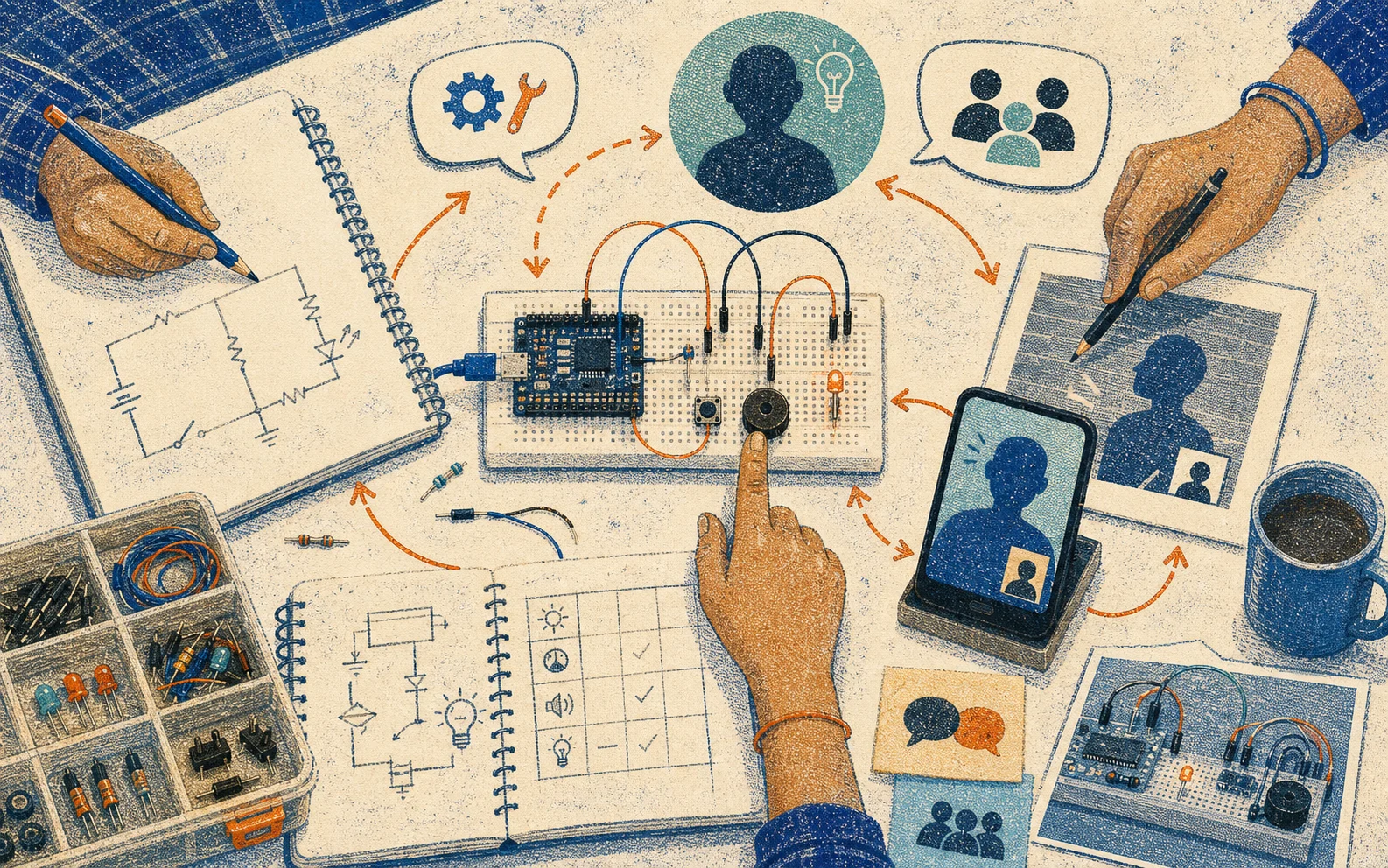
The better model respects teachers as the anchor and surrounds them with practical help. Mentors can co-plan activities, record short troubleshooting videos, review student project photos, run monthly build clinics, and help teachers decide which concepts matter most.
This approach avoids the outsider trap. The mentor does not replace the teacher. The mentor increases the teacher's confidence and gives students another adult who takes their ideas seriously.
What good mentoring looks like
Good mentoring is not a lecture delivered over video call. It is specific, artifact-based, and patient. A student shows a circuit photo. The mentor asks what the circuit is supposed to do, what it actually does, and what changed since the last working version. That is enough to teach debugging as a habit.
Mentoring also helps students see pathways. A village student building a water alarm may not know that the same logic connects to embedded systems, agriculture technology, product design, data logging, or electrical engineering. A mentor can make those bridges visible without overwhelming the student.
- +Ask students to explain before giving advice.
- +Praise the quality of testing, not just the working prototype.
- +Use local-language explanations when possible.
- +Create roles for college volunteers, working engineers, educators, and alumni.
- +Keep feedback short enough that students can act on it before the next session.
Showcases turn skill into identity
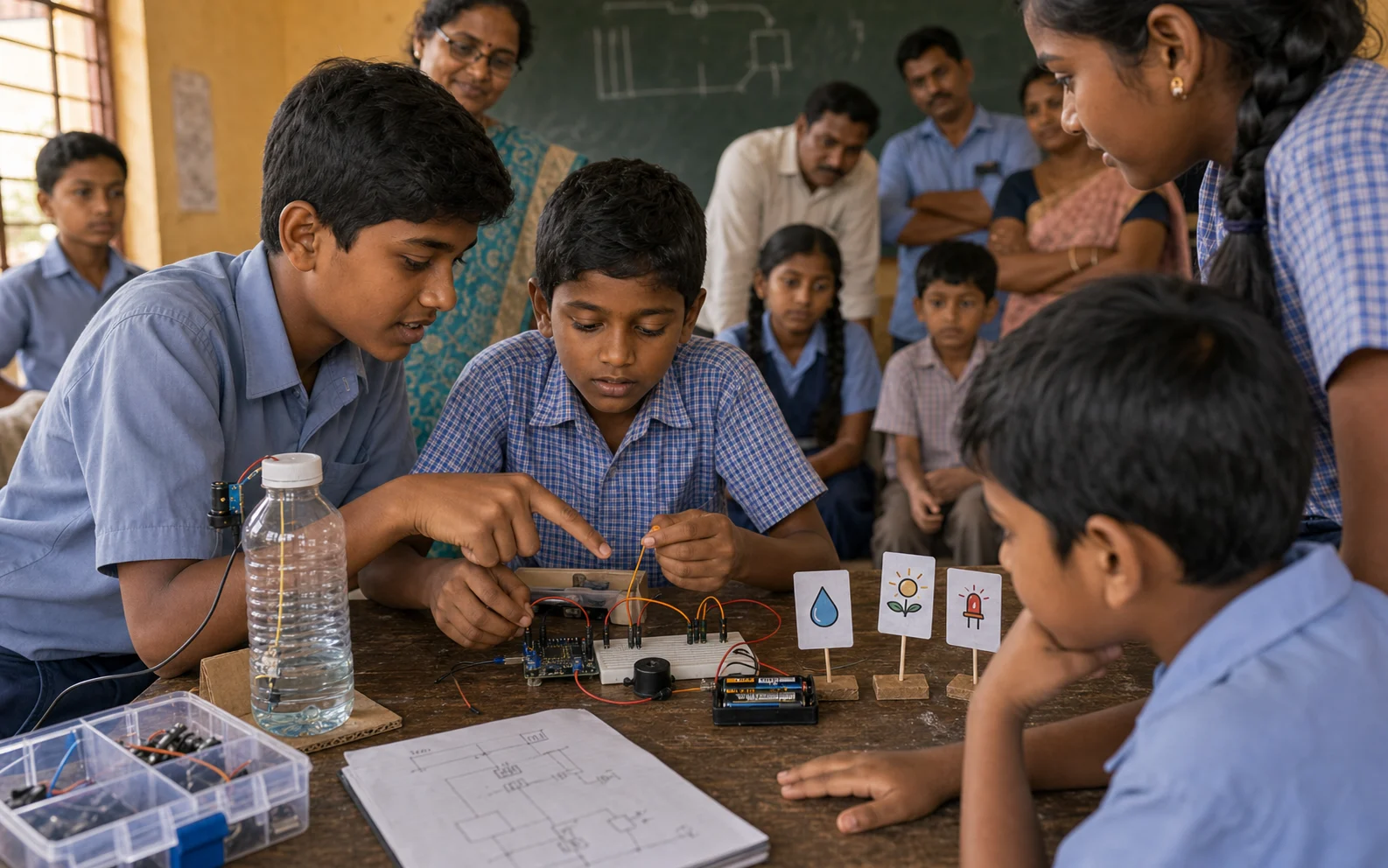
A showcase is not just a final event. It is a social signal. When students explain a prototype to parents, teachers, and local leaders, the village sees them as builders. That matters, especially for girls and first-generation learners whose confidence may be shaped by what the community believes is possible.
The strongest rural STEM stories often include a public moment: a science fair, a district challenge, a school assembly, a community demonstration, or a student teaching younger children. These moments make learning visible and raise the standard for the next cohort.
SFI can build this into the program rhythm. Every lab cycle should end with a small demonstration. Every cohort should have a few students who become peer mentors. Every mentor should leave behind capability, not dependency.
A practical SFI mentor model
A scalable mentor model can be simple. Local facilitators run weekly sessions. Remote mentors review artifacts twice a month. College volunteers support project days. Professional mentors join for career conversations and advanced debugging. Teachers remain central, because they understand the students and the school reality.
The system should be lightweight enough to survive. WhatsApp groups, structured photo submissions, short build logs, and monthly office hours may be more useful than a heavy platform. The goal is continuity, not software elegance.
Mentorship is what turns a lab from a room into a relationship. Students need someone who believes their question is worth another attempt.
Sources and further reading
Read next
All notesWhy an Arduino Simulator Belongs in a Rural STEM Lab
How browser-based circuit simulation can protect limited kits, help teachers explain invisible logic, and give rural students more chances to practice.
Village Problems Make the Best STEM Projects
Why rural maker education should start with familiar problems and guide students toward prototypes they can explain to their own community.